Hot Oil Garlic Sambal: The Aromatic Indonesian Condiment You Need in Your Kitchen
michael samsir
Lead author at Rolly.
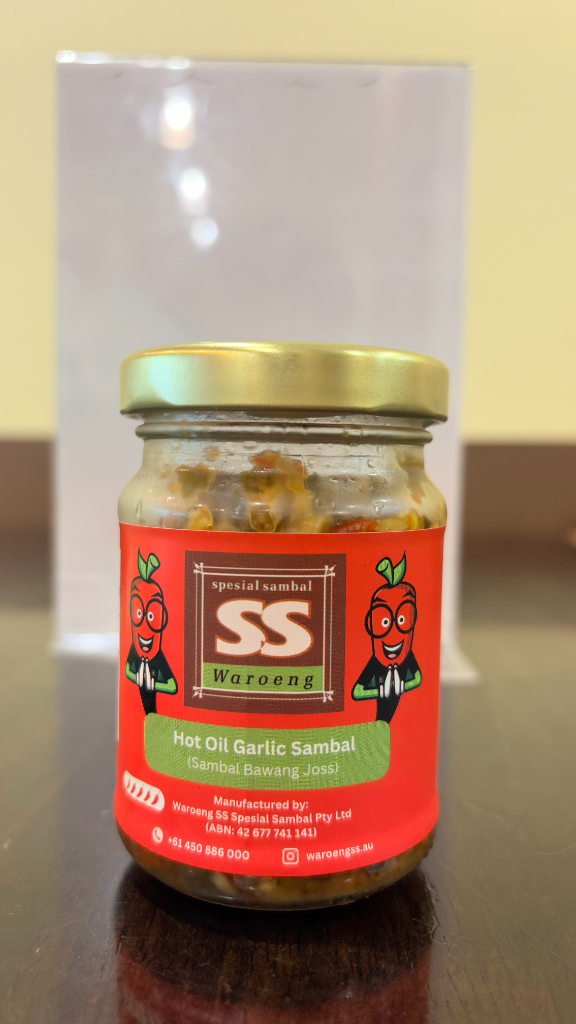
Hot Oil Garlic Sambal is Indonesia's aromatic hot oil condiment — made by splashing hot oil over fresh chili and garlic. Buy online from SS Mart, Melbourne.
Open a jar of SS Mart's Hot Oil Garlic Sambal and the smell reaches you before anything else. Fragrant, warm, deeply savoury — garlic and chili that have been unlocked by heat rather than merely mixed with it. It is the smell that tells you this is not a sauce in the ordinary sense. It is something made with a specific technique, and that technique is what makes it work.
Hot Oil Garlic Sambal is not a chili crisp. The two are often compared because they both involve garlic, chili, and oil — but the method is fundamentally different, and the result is fundamentally different. Chili crisp is built on frying ingredients until crunchy. Hot Oil Garlic Sambal is built on the opposite: cut chili, garlic, and aromatics are prepared first, and then a surge of very hot oil is poured directly over them. The heat of the oil instantly releases the volatile aromatic compounds in the chili and garlic — blooming them, not frying them — and the result is an oil that is fragrant, soft, and intensely aromatic.
Made fresh at 398 Lygon Street, Carlton, and shipped across Australia, it is one of the most versatile things you can keep on your bench.
The Indonesian Tradition Behind This Technique
Aromatic chili oil is not a trend in Indonesia. It is infrastructure.
Walk into any Indonesian household and you will find some version of this combination — whether it is chili-infused cooking oil ladled over morning rice, fragrant shallots softened in hot oil before they hit the pan, or a ready-made sambal that carries both the spice and the perfume of freshly bloomed aromatics. The practice of using heat to unlock flavour from chili, garlic, and spices is as old as Indonesian cooking itself. The specific technique used in Hot Oil Garlic Sambal — pouring very hot oil over prepared aromatics — is one of the most direct expressions of it.
The hot oil does something that slow cooking cannot. When it hits the cut chili and garlic, the surface temperature surges instantly, releasing aromatic compounds that would otherwise take minutes to develop. The result is an intensity of fragrance that is immediate and unmistakable. The aromatics are not fried into submission. They are awakened. The oil becomes the carrier — softened, fragrant, and deeply flavoured — and the whole mixture transforms into something greater than the sum of its parts.
Why It Is Not Chili Crisp — And Why That Matters
It is worth being precise about this, because the two products are often grouped together and they are not the same thing.
Chili crisp — the category popularised by Lao Gan Ma and refined by brands like Fly By Jing — is made by frying ingredients in oil until they become crispy: chili flakes, garlic, shallots, and often additional proteins like dried shrimp or peanuts. The oil is a cooking medium. The texture is a defining feature. The result is something with crunch, chew, and the character of deep-fried aromatics.
Hot Oil Garlic Sambal inverts this entirely. The ingredients — cut chili, garlic, and aromatics — are prepared and placed first. The oil is heated separately until very hot. Then the oil is poured over the aromatics. This single step is the whole method. The oil does not fry the ingredients over time; it blooms them in an instant. The aromatics remain soft. The oil becomes fragrant. The texture is rich and smooth, not crunchy.
The flavour difference is equally significant. Chili crisp carries the savoury, slightly caramelised character of things that have been deep-fried. Hot Oil Garlic Sambal carries the bright, immediate fragrance of aromatics that have been released at their peak — the smell of garlic and chili that hits when you first open the jar is the same character that comes through when you eat it.
If chili crisp is the slow-roasted version of this flavour, Hot Oil Garlic Sambal is the fresh one.
Texture and Aroma: What You Are Actually Getting
Hot Oil Garlic Sambal is soft, fragrant, and richly aromatic. The chili and garlic have been bloomed by hot oil, so they are tender rather than crunchy — their cell walls have been opened by the heat, releasing flavour and fragrance into the oil that surrounds them.
The oil itself is the main vehicle. It is deeply infused with garlic and chili, and it carries that flavour evenly onto whatever it touches. A spoonful stirred through hot rice coats every grain. A small amount added to a pan at the start of cooking perfumes the whole dish. Used as a finishing drizzle over cooked food, it delivers a concentrated aromatic hit at the end.
The softened aromatics in the jar — the chili pieces, the garlic — are not incidental. They add body and intensity wherever the oil alone might be subtle. Spoon them over eggs. Stir them through noodles. Add them to the wok alongside your proteins.
This is a condiment that works at every stage of cooking: before, during, and after.
What to Use It On
The short answer is: most things.
Noodles. Toss through cooked noodles — ramen, spaghetti, rice noodles — as a no-recipe weeknight dinner. Add a soft-boiled egg, some cucumber, a splash of soy sauce and rice vinegar if you have them. Done in the time it takes the noodles to cook.
Dumplings. Displace the standard dumpling dipping sauce entirely. A small bowl of Hot Oil Garlic Sambal with a few drops of black vinegar is a better companion for pork and cabbage dumplings than almost any commercial dipping sauce.
Toast. This sounds simple because it is. Good bread, toasted hard, spread with something creamy — labneh, cream cheese, avocado — then finished with a generous spoon of the sambal. The contrast between cold and crispy, creamy and spiced, is a complete breakfast.
Fried rice. Add a spoonful to the wok when your aromatics are fragrant, before the rice goes in. It distributes through the whole dish.
Vegetables. Blanched green beans, broccolini, silverbeet, spinach — any vegetable that benefits from fat and salt will benefit from this. Steam or blanch, drain thoroughly, dress with a small spoon of the sambal while hot.
Eggs. The next section covers this in more detail, but the principle is universal: there is almost no egg preparation that does not improve with this sambal. Fried, scrambled, soft-boiled, poached — the garlic and chili belong with the yolk.
Heat Level: For Garlic Lovers Who Want Heat in the Background
Hot Oil Garlic Sambal is not designed to test your tolerance. It is designed to make food taste better.
The heat level sits at burning hot — present, recognisable, and warm without being sharp. It is the kind of heat that lingers pleasantly after you swallow rather than the kind that announces itself the moment it lands. People who eat chili daily will find it a useful everyday condiment rather than a challenge.
The garlic is the dominant note. The heat is the supporting one. Both are there to serve the food, not to make a point.
Why Made in Australia Matters
There are Indonesian condiments available in Australia. Some are imported and have been sitting in a container, then a warehouse, then on a shelf for months by the time they reach you. The quality varies, and freshness is not a guarantee.
SS Mart makes its sambals in-kitchen at 398 Lygon Street, Carlton, in small batches. There are no preservatives, no artificial additives, and no extended supply chain between production and your door. The chili and garlic in Hot Oil Garlic Sambal are prepared and bloomed fresh, not processed and stabilised for a twelve-month shelf life.
This matters in a product where the aromatic character of freshly bloomed chili and garlic is the whole point. The fragrance that comes from the hot oil process depends on the quality of the aromatics at the moment the oil hits them. An old, stale chili gives you very little. A fresh one gives you everything. When you open a jar from SS Mart, the difference is immediate.
Hot Oil Garlic Sambal is available in both small and large jar sizes. The small jar is the right entry point if this is your first Indonesian sambal. The large jar is for people who already know what happens when they run out.
Try SS Mart's Hot Oil Garlic Sambal — made fresh in Carlton using the traditional hot oil technique, shipped Australia-wide. [Order yours here — small jar and large jar available.]
For more on the SS Mart sambal range and how to use them, see our guide to Indonesian sambals.
Recipe: Telur Mata Sapi with Hot Oil Garlic (Sunny Side Up Egg with Chili Oil)
The best 3-minute breakfast you have never made.
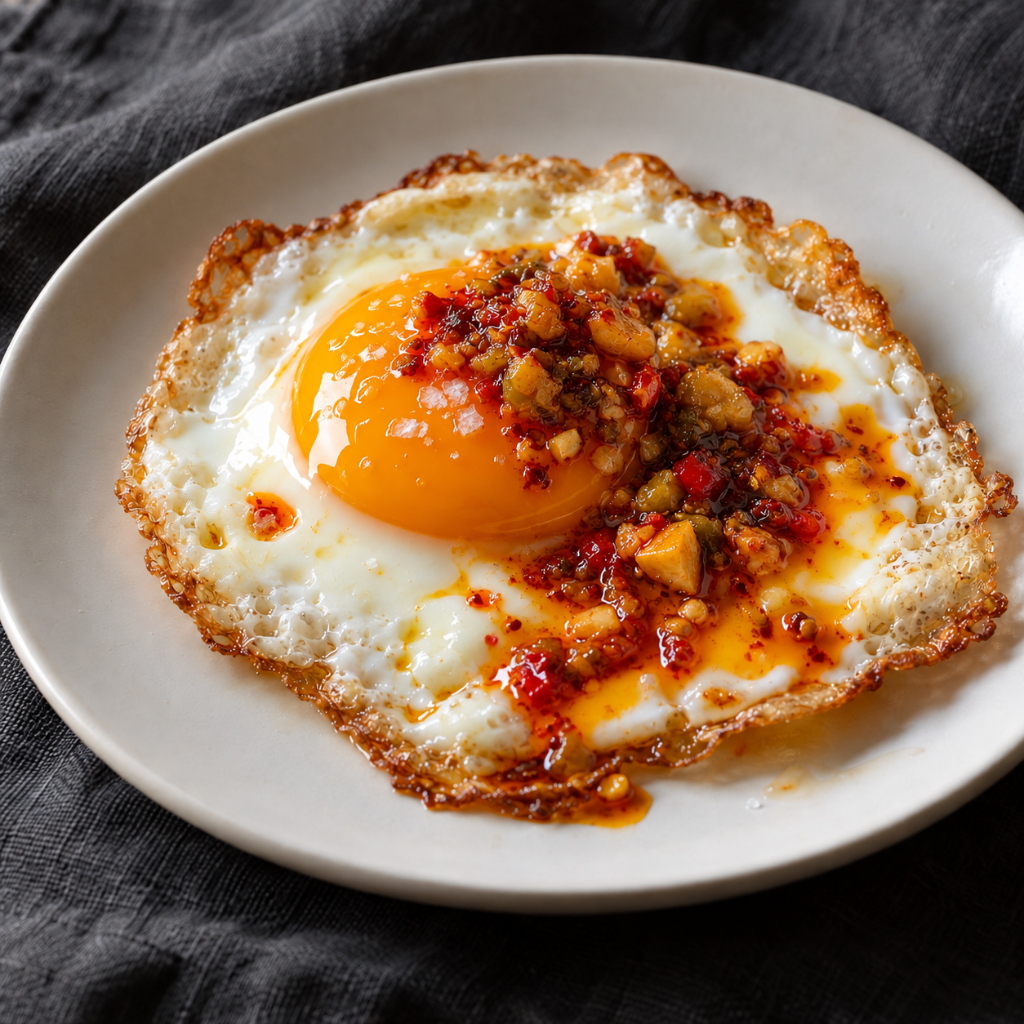
Image caption: Telur Mata Sapi with Hot Oil Garlic Sambal — a 3-minute breakfast
This is not a complex recipe. It is a demonstration of how a single ingredient changes everything.
Serves 1
What you need:
- 1 egg
- 1 teaspoon unsalted butter
- 1 teaspoon SS Mart Hot Oil Garlic Sambal
- A pinch of flaked salt
Method:
Place a small pan over medium heat. Add the butter and let it melt until it foams and the foam begins to subside — this takes about 30 seconds. Crack the egg directly into the pan.
Leave the heat at medium. Do not touch it. Let the egg cook undisturbed until the white is fully set and the edges have crisped and taken on some colour from the butter. The yolk should still be runny. This takes approximately 2 minutes.
Slide the egg onto a plate. Immediately spoon the Hot Oil Garlic Sambal directly over the yolk and whites, letting the infused oil run across the surface of the egg. The heat of the egg will warm the sambal and release its aroma.
Finish with a pinch of flaked salt.
Eat immediately.
The egg takes two minutes. The sambal takes three seconds. The result is the kind of breakfast that makes you reconsider what you have been doing with eggs.
SS Mart Hot Oil Garlic Sambal is made fresh in Carlton, Melbourne, and shipped across Australia. Available in small and large jars. No preservatives. No artificial additives. Indonesian-made, Melbourne-fresh.
Share
Related articles
September 15, 2026
Green Chili Garlic Sambal: The Everyday Condiment You Didn't Know You Needed

September 1, 2026
Balinese Matah Sambal: The Fresh Chili Sauce That Changed How Australia Thinks About Indonesian Food
July 25, 2026
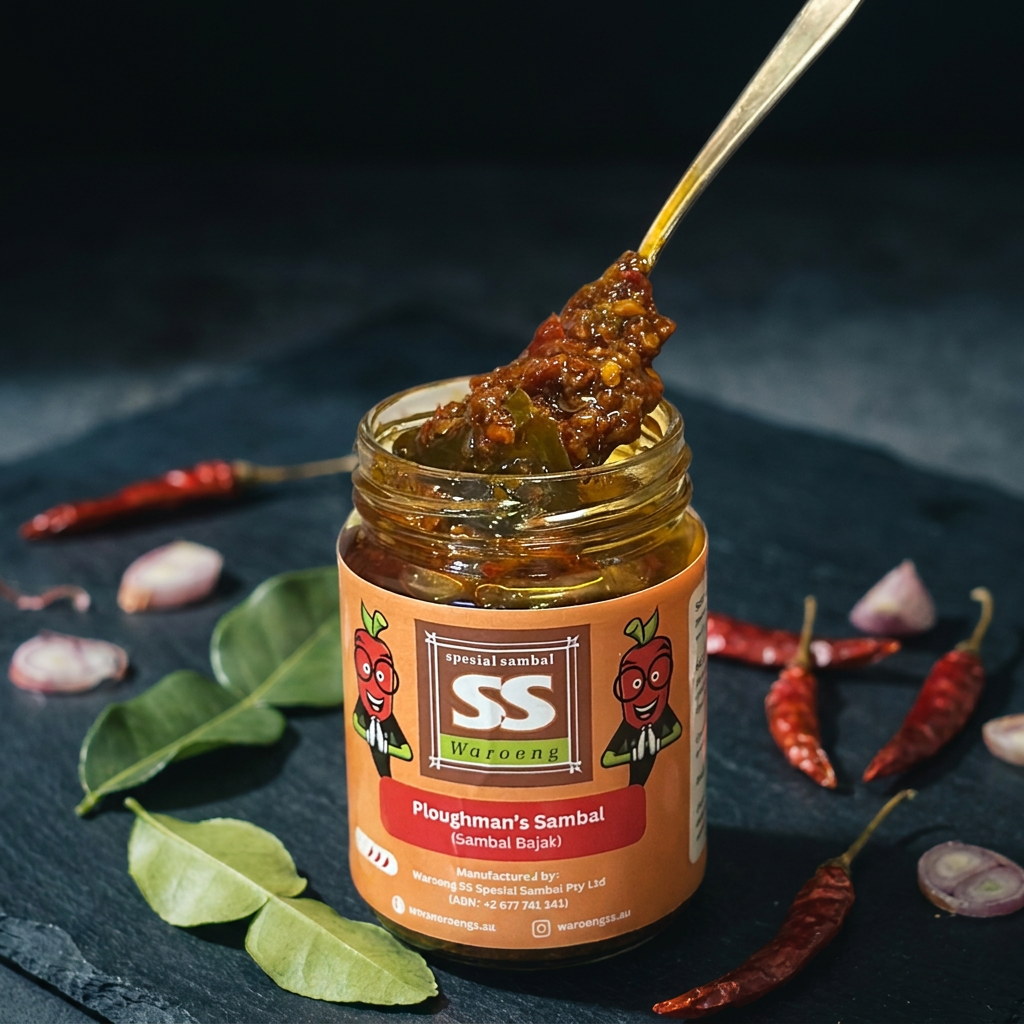
What Makes Sambal Bajak (Ploughman Sambal) Different: A Deep Dive into Indonesia's Most Complex Chilli Paste