What Makes Sambal Bajak (Ploughman Sambal) Different: A Deep Dive into Indonesia's Most Complex Chilli Paste
michael samsir
Lead author at Rolly.
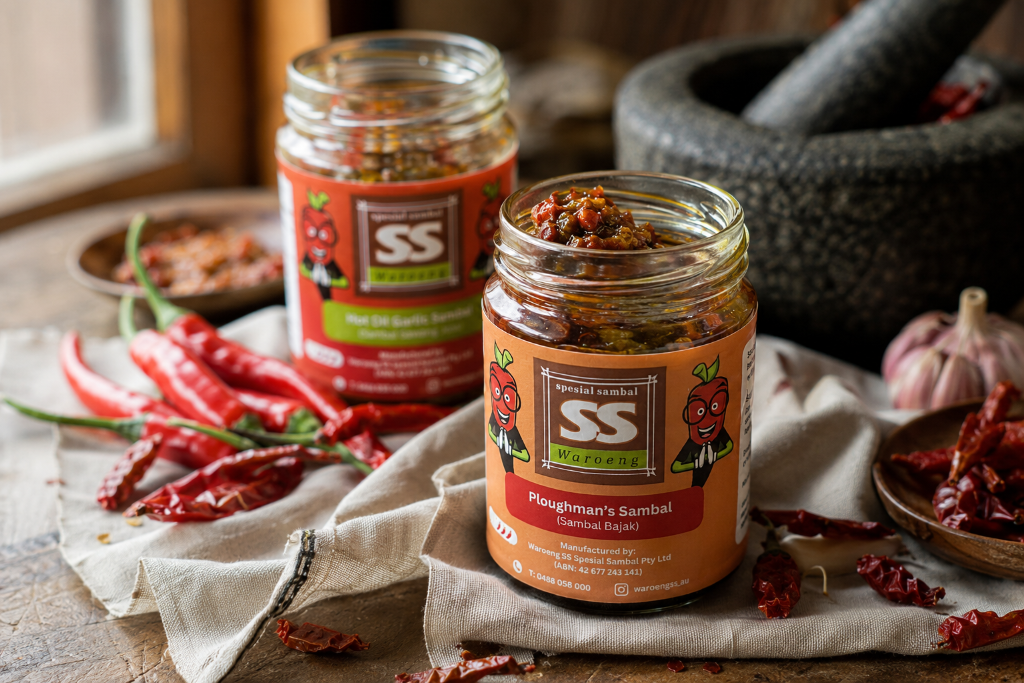
Sambal Bajak (Ploughman Sambal) is not simply hot — it is deep, aromatic, and layered in a way that most chilli condiments are not. Built on a Javanese agricultural tradition and defined by the distinctive fragrance of kaffir lime leaves, it is one of Indonesia's most complex sambals. Here is everything you need to know about it, and how to cook with it in an Australian kitchen.
Open the jar slowly.
Before you have even tilted the lid, you notice the smell — layered and full, chilli heat underpinned by something rounder and more aromatic. There is a faint citrus note, almost floral, that cuts through the deep red warmth of the paste. That is the kaffir lime leaf. Then comes the shallot and garlic, cooked down until caramelised and complex, and beneath it all, a low slow heat that does not announce itself immediately but builds deliberately.
This is sambal bajak (tl: Ploughman Sambal) — and it is unlike anything else in the sambal family.
What Is Sambal Bajak?
Sambal Bajak is a cooked chilli paste originating from Javanese culinary tradition. It is one of the older, more established members of the sambal family, with roots in the agricultural communities of Central and East Java that predate the modern era of Indonesian cooking.
The name offers a clue to its origins. In Javanese, bajak means plough — the implement used to turn earth for cultivation. The association is agricultural: this is a sambal that belongs to working communities, to farmers and labourers, to people who needed food that was substantial, satisfying, and shelf-stable enough to last through a day of physical work.
Historically, sambal bajak was prepared in larger quantities than other sambals, cooked long and slow so that the oils separated and rose to the surface — a natural preservative effect that extended its life without refrigeration. It was made to endure, to be on hand whenever it was needed, to be the constant presence in a kitchen that everything else could rely on.
That functional origin has not diminished it. If anything, the requirement for longevity shaped bajak sambal into something more carefully built than many fresher preparations. Every ingredient is selected for what it contributes to a flavour that needs to hold over time — and what results is a paste of genuine depth.
The Key Ingredient: Kaffir Lime Leaves
If one ingredient defines sambal bajak and separates it from other members of the sambal family, it is the kaffir lime leaf — known in Indonesian and Javanese as daun jeruk purut.
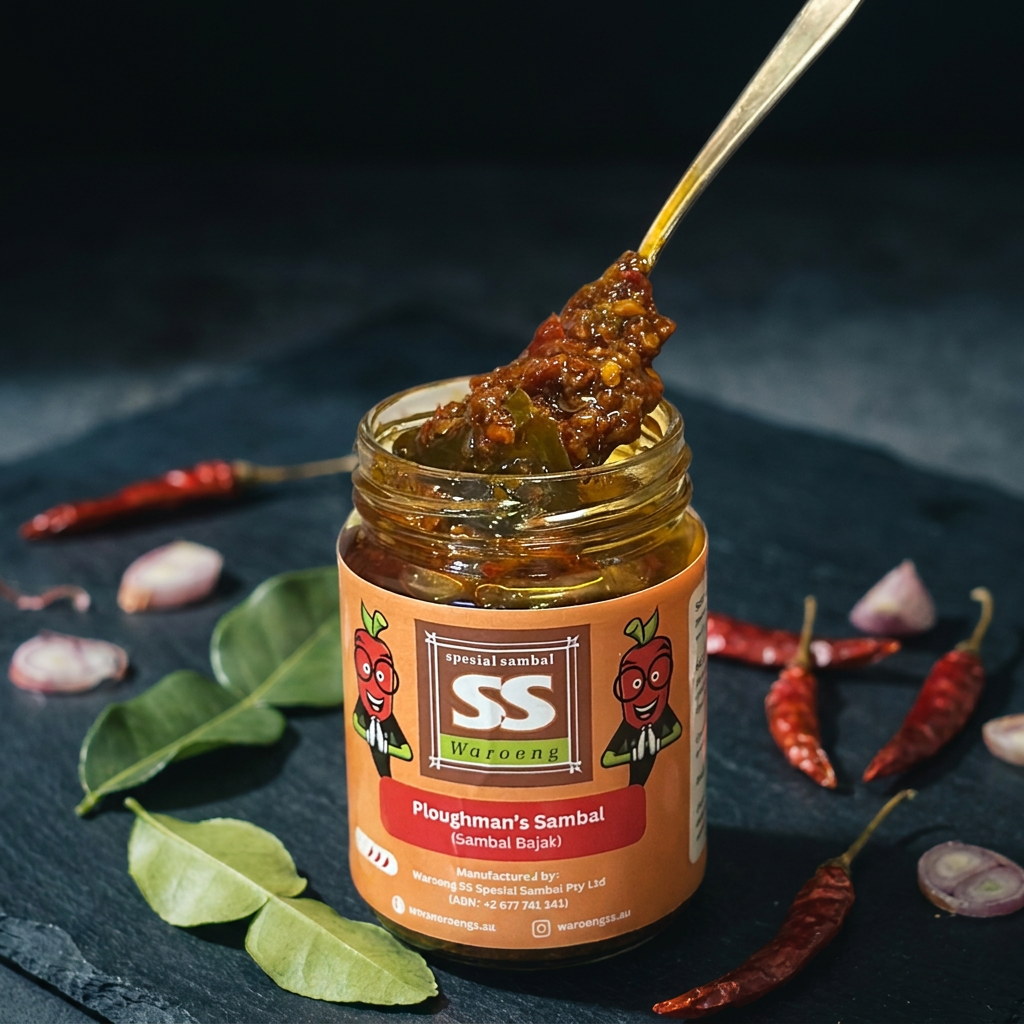
Kaffir lime leaves are not interchangeable with regular lime or lemon in flavour. They carry a distinctive aromatic profile — intensely citrus but without the sharp tartness of fresh lime juice, floral and slightly resinous, with a fragrance that is released most fully when the leaf is bruised, torn, or cooked in oil. They are a foundational aromatics ingredient across Southeast Asian cooking, from Thai green curry to Balinese fish dishes to Javanese sambal.
In sambal bajak, the leaves are cooked into the paste rather than used as a garnish. This is important. Cooking kaffir lime leaves in oil over time does not simply add flavour — it transforms it. The sharpness mellows. The floral quality becomes rounder. The citrus note integrates with the chilli and shallot base rather than sitting on top of it. What you end up with is not a paste that tastes of lime leaf — it is a paste that tastes like a version of itself that could not exist without lime leaf.
This is the aromatic signature that distinguishes bajak from, say, sambal merah (which tends to be cleaner and hotter) or sambal terasi (which leads with fermented shrimp paste umami). Bajak is defined by integration — a harmony of elements that took a long time and careful cooking to achieve.
Image caption: The distinctive kaffir lime leaves used in SS Mart Bajak Sambal — the ingredient that sets it apart from all other sambal varieties.
Flavour Profile: What to Expect
Sambal bajak is bold. It is not a background condiment and it will not disappear into a dish.
The immediate impression is aromatic — that kaffir lime fragrance — followed quickly by the warmth of the chilli, which is present but not aggressive in the way of some fresh-chilli preparations. The heat in bajak builds rather than strikes: you feel it accumulate over the course of eating rather than announcing itself in the first mouthful. This makes it genuinely usable across a range of dishes, including those you want to share with people who have moderate rather than high chilli tolerance.
Beneath the heat is a sweetness — not added sugar, but the natural sweetness that develops when shallots and garlic are cooked down properly over time. There is also a slight savouriness, a roundness that comes from the cooking process itself. Bajak is a cooked sambal, and cooking transforms raw ingredients in ways that cannot be replicated by simply mixing them together.
Compared to sambal terasi: bajak is more aromatic and less intensely savoury. Terasi leads with fermented funk; bajak leads with citrus and warmth.
Compared to sambal merah: bajak is more complex and less direct. Merah is heat-forward and clean; bajak is layered and fragrant.
Among complex Indonesian sambals, bajak is considered one of the most versatile — assertive enough to stand on its own, integrated enough to work with a wide range of foods.
Traditional Uses in Indonesian Cooking
In Javanese kitchens, sambal bajak serves multiple roles simultaneously — a versatility that reflects its position as a household staple rather than a specialist preparation.
As a table condiment, it accompanies rice dishes, noodles, grilled fish, and fried foods. A small spoonful of bajak alongside a plate of nasi putih (plain white rice) and a fried egg is a complete meal in much of Java — simple, satisfying, and deeply flavoured.
As a cooking base, bajak is stirred into dishes during cooking to build an aromatic, chilli-forward foundation. It works in the same way that a soffritto or a mirepoix works in European cooking — it is the flavour infrastructure on which everything else is built.
As a marinade, it coats protein before grilling or frying, contributing heat, aroma, and a slight caramelisation when exposed to high heat. Chicken thighs marinated in bajak and then pan-fried until the edges catch and char slightly is a dish that requires almost no work and produces something genuinely excellent.
How to Use SS Mart Sambal Bajak in an Australian Kitchen
You do not need to cook Indonesian food to get value from a jar of sambal bajak. Its flavour profile integrates naturally with a broad range of cooking styles, and its versatility makes it one of the most useful condiments you can keep in a refrigerator.
With eggs: A spoonful of bajak alongside fried or scrambled eggs transforms breakfast. The aromatic heat works with the fat of the egg in the same way a good hot sauce does, but with considerably more complexity. Stir it into soft scrambled eggs for something entirely different.
On grilled chicken: Rub a tablespoon of bajak under the skin of chicken thighs before grilling. The paste caramelises on contact with high heat, forming a slightly charred, deeply aromatic crust. Serve with cucumber and rice for a complete meal.
In a stir-fry: Add bajak to a hot wok before the vegetables go in, letting it fry in oil for 30 seconds. This releases its aromatics into the base of the dish and gives the whole stir-fry a Javanese character without requiring any additional spices.
In sandwiches and wraps: A thin smear of bajak on toasted bread, beneath a fried egg and some pickled cucumber, is excellent. It functions like a sriracha mayo but with more dimension — and it pairs particularly well with crispy fried or grilled chicken.
As a dipping sauce: Thin it slightly with a squeeze of fresh lime juice to make a quick dipping sauce for prawn crackers, spring rolls, or grilled vegetables.
Which Size to Buy
SS Mart Sambal Bajak is available in two sizes: 140g and 240g. Which you choose depends on how you plan to use it.
The 140g jar is the right starting point if you are trying bajak sambal for the first time or if sambal is not yet a regular part of your cooking. It is enough for 8–12 servings depending on how generously you use it, and it gives you a clear sense of the flavour profile before you commit to a larger quantity. Once opened, store it in the refrigerator and use within 4–6 weeks for best results.
The 240g jar makes sense if you already know you enjoy bajak sambal, if you cook for a larger household, or if you plan to use it as a cooking ingredient rather than purely as a condiment. At the larger size, you can be more generous — adding a full tablespoon to a marinade or stir-fry without worrying about running low. For regular cooks, the 240g jar typically offers better value over time.
Try SS Mart Sambal Bajak — available in 140g and 240g jars, shipped across Australia.
Recipe: Ayam Goreng Bajak (Bajak Fried Chicken)
This is one of the most straightforward and rewarding uses of bajak sambal as a cooking ingredient. The marinade requires almost no preparation, and the result — caramelised, aromatic, slightly charred chicken served over rice with fresh cucumber — is a complete meal that tastes far more considered than the effort involved.
This recipe serves 2–4.
Ingredients
- 600–800g bone-in, skin-on chicken thighs (4 thighs)
- 3 tablespoons SS Mart Sambal Bajak
- 3 cloves garlic, finely grated or minced
- 2 tablespoons kecap manis (Indonesian sweet soy sauce)
- 1 tablespoon neutral cooking oil (plus extra for the pan)
- Salt and white pepper to taste
- To serve: steamed jasmine rice, sliced cucumber, additional sambal bajak on the side
Method
- Make the marinade. In a bowl large enough to hold the chicken, combine the SS Mart Sambal Bajak, minced garlic, kecap manis, and the tablespoon of oil. Season with a small pinch of salt and white pepper. Mix well — the marinade will be thick and fragrant.
- Marinate the chicken. Add the chicken thighs to the bowl and turn them to coat thoroughly, pressing the marinade under the skin where possible. Cover and refrigerate for at least 30 minutes, or up to 4 hours. A longer marinate produces deeper flavour, but 30 minutes is sufficient for a weeknight meal.
- Bring to room temperature. Remove the chicken from the refrigerator 15 minutes before cooking. This ensures more even cooking throughout and helps the skin crisp properly.
- Cook the chicken. Heat a thin film of oil in a heavy-based frying pan or cast iron skillet over medium-high heat. When the oil shimmers, add the chicken thighs skin-side down. Cook undisturbed for 6–8 minutes until the skin is deep golden and developing char at the edges — the kecap manis in the marinade will caramelise. Turn the chicken and cook for a further 8–10 minutes on the other side until cooked through. (The internal temperature at the thickest point should reach 75°C.) If the marinade is colouring too quickly, reduce the heat to medium.
- Rest and serve. Remove the chicken from the pan and allow it to rest on a rack or cutting board for 5 minutes. This allows the juices to redistribute and makes the chicken easier to cut. Serve over steamed jasmine rice with sliced cucumber alongside and a small spoonful of additional SS Mart Sambal Bajak for those who want more heat at the table.
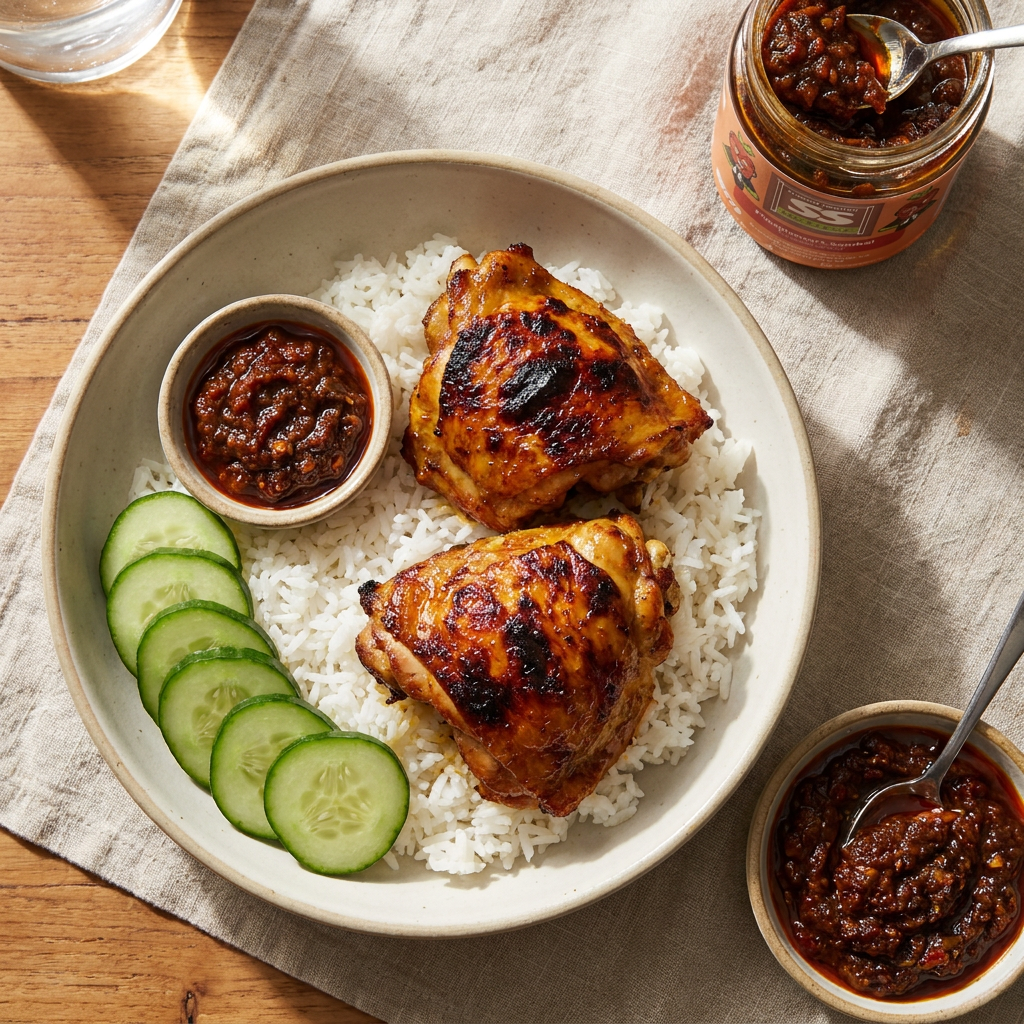
Image caption: Ayam Goreng Bajak — chicken thighs marinated in SS Mart Sambal Bajak, pan-fried until caramelised and deeply aromatic.
Bagikan