Sambal Oelek vs Sambal Bajak vs Sriracha: What's the Difference (and What to Use Instead)
michael samsir
Lead author at Rolly.
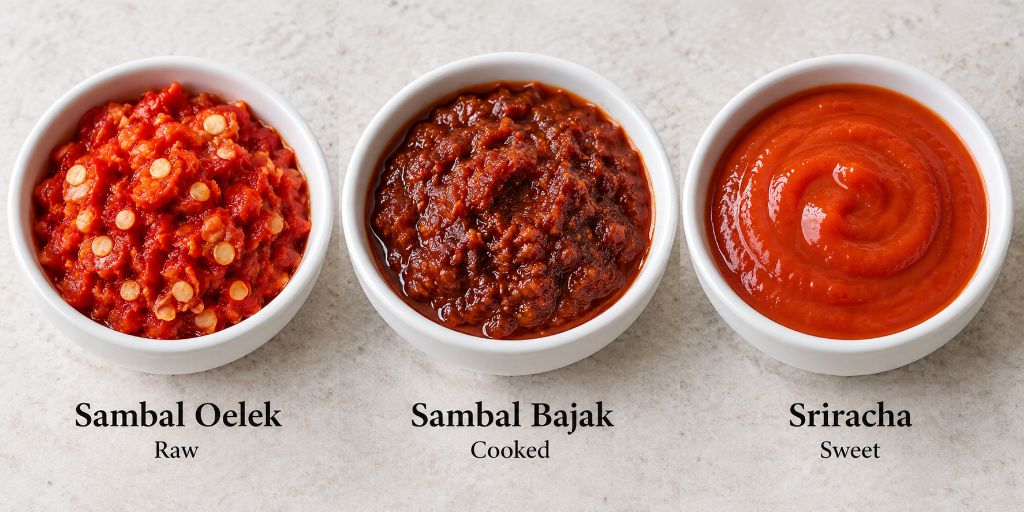
Three red jars, three very different condiments. This guide explains sambal oelek, sambal bajak and sriracha, how to substitute one for another and which to buy first.
Walk down the Asian aisle of almost any Australian supermarket and you will find three red jars sitting side by side. One is a coarse, bright paste. One is a smooth, glossy sauce, usually with a rooster on the bottle. One may be a dark, jammy spoonful that looks nothing like the others. All three are red, all three are hot, and most shoppers cannot say with confidence which one a recipe actually wants.
They are not interchangeable. Each is made differently, tastes different and does a different job in the kitchen. This guide explains the differences, shows when you can swap one for another and helps you decide which jar to buy first.
What Is Sambal Oelek?
Sambal oelek is a raw, coarsely ground chili paste made from fresh red chilies, salt and usually vinegar. It tastes sharp, clean and straightforwardly hot, with no added sweetness, which makes it a base ingredient for cooking rather than a finished sauce.
The name comes from ulekan, the stone mortar used to crush the chilies. Because nothing is cooked, you taste chili first and little else. Cooks stir it into marinades, soups, stir-fries and dressings to add heat without changing the flavour of the dish. If you have ever seen a recipe call for "a spoonful of sambal oelek", this is what it means.
What Is Sriracha, and How Is It Different from Sambal Oelek?
Sriracha is a Thai-origin chili sauce that is smooth, sweet and tangy, with garlic and sugar well to the front. Unlike sambal oelek, it is pourable and balanced for the table, so it works as a finishing sauce rather than a cooking base.
This is the main answer to the common sambal oelek vs sriracha question. Sambal oelek is coarse, tart and unsweetened. Sriracha is smooth, sweeter and garlicky. One is an ingredient you cook with; the other is a sauce you add at the end, over eggs, noodles, fried rice or a sandwich. Swapping them changes both the texture and the sweetness of a dish.
What Is Sambal Bajak?
Sambal Bajak is a Javanese cooked chili paste. Chili, shallot and garlic are slow-cooked with palm sugar and kaffir lime leaf until dark and glossy. The result is sweet, savoury and deep, with rounded heat rather than a sharp bite.
Where oelek is raw, Bajak is cooked, and that single difference changes everything. Slow cooking mellows the chili, caramelises the sugars and blends the aromatics into something far more complex than a straight chili paste. It is an ingredient and a condiment at once: spoon it onto rice, or fry it first to start a dish. For a fuller explanation, read what makes Bajak Sambal different.
Sambal Oelek vs Sambal Bajak vs Sriracha: Side-by-Side
| Sambal oelek | Sriracha | Sambal Bajak | |
|---|---|---|---|
| Style | Raw | Smooth, fermented-style table sauce | Slow-cooked |
| Texture | Coarse, wet paste | Smooth and pourable | Thick, dark, glossy paste |
| Heat | Sharp and clean | Moderate, softened by sugar | Rounded and building |
| Sweetness | None to very little | Noticeably sweet | Gently sweet from palm sugar |
| Key flavours | Chili, salt, vinegar | Chili, garlic, sugar, vinegar | Chili, shallot, garlic, palm sugar, kaffir lime leaf |
| Best uses | Cooking base, marinades, dressings | Table sauce, drizzling, dipping | Stir-fries, rice, noodles, eggs, marinades |
Heat varies from brand to brand and batch to batch, so use the table as a guide to character, not a heat rating.
Can I Use Sambal Bajak Instead of Sambal Oelek?
Often, yes, if you accept a different result. Bajak can replace sambal oelek in cooked dishes such as stir-fries, fried rice, noodles and braises, giving more depth. It is a poor swap where a recipe needs clean, sharp, raw chili heat.
Bajak works well when:
- The dish is cooked. Stir-fries, fried rice, noodle dishes and sauces simmered for a few minutes suit its savoury-sweet depth.
- You want richness. It adds body and a hint of caramel that oelek does not.
- The dish already has sweetness to spare. Glazes and marinades handle it easily.
Bajak is a weaker match when:
- The recipe is raw or fresh. Light dressings, fresh salsas and slaws rely on the bright bite of oelek.
- Colour and clarity matter. Bajak is dark and will tint pale broths and sauces.
- The dish is delicate. Clear soups and lightly dressed salads can be overwhelmed.
How Do I Adjust a Recipe When Substituting?
Bajak is sweeter and deeper than oelek, so a few small changes keep the dish balanced.
- Add acid. Oelek brings vinegar; Bajak is softer. Stir in a small squeeze of lime or a few drops of vinegar to restore brightness.
- Reduce sugar elsewhere. If the recipe also calls for sugar, honey or kecap manis, trim it a little, then taste.
- Start with less. Begin with about the same amount, taste, then add more. Bajak's flavour builds as it cooks.
- Salt last. Taste before adding extra salt.
Going the other way, the best substitute for sambal oelek is not always another sambal. Fresh chili with a pinch of salt and a splash of vinegar, blended or finely chopped, is the closest match. To stand in for Bajak when you only have oelek, add a small pinch of sugar and cook it briefly in oil to take off the raw edge. Sriracha is a looser stand-in for either, because it is sweeter and thinner, so reduce other sugar and expect a smoother result.
Which Should I Buy First?
If you cook a lot of Southeast Asian food from recipes, a jar of oelek is a sensible pantry staple because so many recipes call for it. If you want a condiment that makes simple food taste finished, such as rice, eggs, noodles and vegetables, start with Sambal Bajak. It is available in a 140g jar to try and a 240g jar for regular use.
Many cooks end up keeping both. Oelek is the neutral heat; Bajak is the flavour. If you prefer something fresher than either, the Green Chili Garlic Sambal is an easy everyday option, and the Hot Oil Garlic Sambal suits anyone who likes a crisp, fragrant finish. For seafood lovers, the seafood sambals are the next step. New to the whole category? Start with the beginner guide to sambal.
Ready to move beyond sambal oelek? Try SS Mart Bajak Sambal, shipped across Australia.
Want ideas once the jar is open? Read next: How to Use Sambal Bajak: 8 Everyday Ways.
Recipe: Quick Bajak Stir-Fried Greens
Fast, green and savoury, this is the easiest way to taste how Bajak behaves in a pan.
Serves 2
What you need:
- 1 tablespoon neutral oil
- 3 cloves garlic, thinly sliced
- 1 large bunch choy sum or broccolini, trimmed and cut into lengths
- 1 tablespoon SS Mart Sambal Bajak
- 2 to 3 tablespoons water
- Steamed rice, to serve
Method:
Heat the oil in a wok or large frying pan over high heat. Add the garlic and stir for about 15 seconds, until fragrant but not brown.
Add the choy sum or broccolini and toss for 30 seconds. Add the Sambal Bajak and the water, then stir so the paste coats the greens.
Cook for about 2 minutes, until the stems are just tender and the sauce clings. Serve straight away with steamed rice.
Notes: No Bajak on hand? Use 1 tablespoon of sambal oelek plus a small pinch of sugar, and fry it with the garlic for 20 seconds before adding the greens. Taste before adding salt, as sambals differ.
SS Mart sambals are made fresh in Carlton, Melbourne, and shipped across Australia. No preservatives. No artificial additives. Indonesian-made, Melbourne-fresh.
Share
Related articles
November 3, 2026
Sambal Udang and Sambal Cumi Asin: The Seafood Sambals That Define Coastal Indonesian Flavour
October 27, 2026
What Is Sambal? A Beginner's Guide to Indonesia's Essential Chili Condiment
October 20, 2026
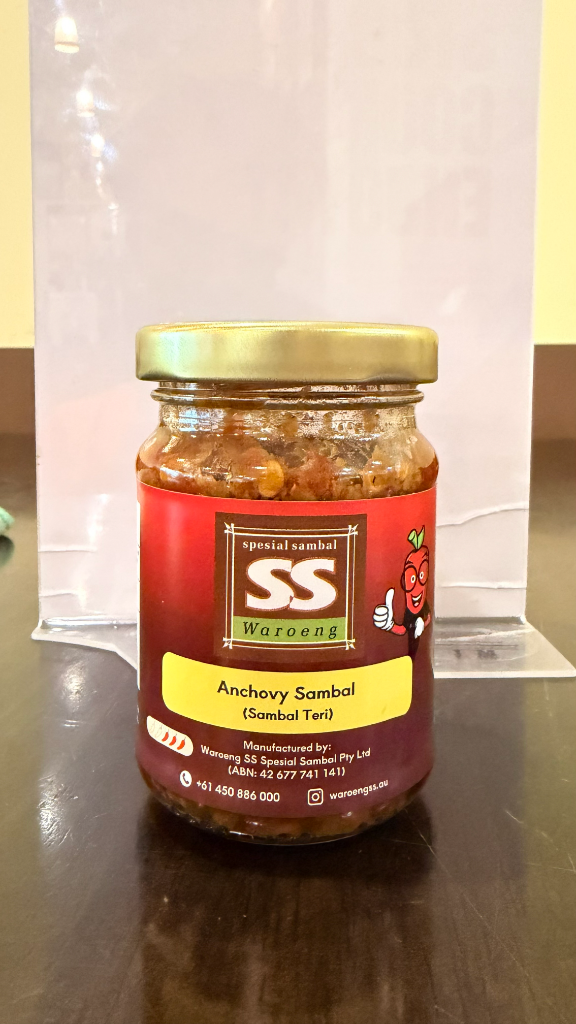
Sambal Teri (Anchovy Sambal): The Umami-Rich Secret Weapon of Indonesian Home Cooking