Sambal Teri (Anchovy Sambal): The Umami-Rich Secret Weapon of Indonesian Home Cooking
michael samsir
Lead author at Rolly.
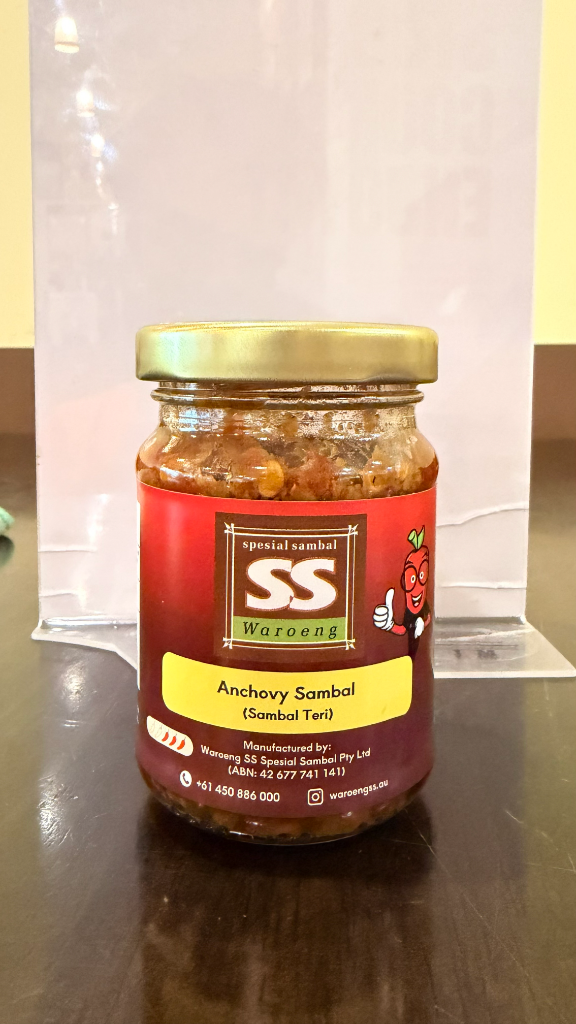
Before the chili hits, there is something else. A deep, briny, savoury smell — the kind that tells your stomach to pay attention before your tongue has had any involvement at all. It is the smell of ikan teri, dried anch
Before the chili hits, there is something else. A deep, briny, savoury smell — the kind that tells your stomach to pay attention before your tongue has had any involvement at all. It is the smell of ikan teri, dried anchovy, hitting a hot pan. It is the smell that millions of Indonesian home cooks have woken up to, that lingers in kitchens from Java to Sumatra, and that signals, without ambiguity, that the food is about to be good.
Sambal Teri is not the kind of condiment that announces itself visually. It sits in its jar without drama: dark, dense, unremarkable on the surface. But open it, and the smell rewrites the room. Add a small spoon to a bowl of plain rice and you understand, immediately, why this sambal appears on the Indonesian table so reliably and so often.
SS Mart's Sambal Teri is made fresh in Carlton, Melbourne, using real dried anchovies, cooked down with chili, garlic, and aromatics into a paste that is at once deeply savoury, gently spiced, and unlike anything else in the range. It is the umami condiment your pantry has been missing.
What Teri Is: The Anchovy That Builds Indonesian Cuisine
Ikan teri — dried anchovy — is one of the foundational proteins of Indonesian cooking. It appears in every region of the archipelago, across thousands of islands and dozens of distinct food cultures, in one form or another.
In its simplest use, teri is fried whole until crispy and eaten as a side dish or mixed into rice. In a more involved preparation, it is ground or blended with chili and aromatics into a paste — this is the sambal teri. In both cases, the dried anchovy is doing the same job: providing protein, providing salt, and providing the kind of deep, persistent savouriness that the food industry has spent decades trying to replicate artificially.
The scientific term for that savouriness is umami. The mechanism is glutamate — a compound that occurs naturally in high concentrations in dried and fermented fish, as well as in ingredients like parmesan, miso, soy sauce, and tomato paste. Ikan teri is one of the most concentrated natural sources of glutamate in Indonesian cooking, which is why even a small amount, cooked into a sambal, can transform a bowl of plain steamed rice into a complete and satisfying meal.
This is not a new discovery. Indonesian cooks have understood it intuitively for generations. What has changed is that the rest of the world is catching up.
History and Geography: A Condiment Across Java and Sumatra
Sambal teri does not belong to one region. It appears with variations across Java, Sumatra, and beyond, shaped by local tastes and available ingredients.
In Java, where the food tends toward a balance of sweet, salty, and spiced, sambal teri often incorporates kecap manis (sweet soy sauce) and is cooked down until the anchovies are almost absorbed into the paste. The result is darker, stickier, and sweeter than versions from other islands.
In Sumatra, where the cooking is generally bolder and more aggressively spiced, sambal teri often uses more chili and less sweetness, with a sharper, more direct heat. Padang-style cooking, the most well-known of Sumatra's food traditions outside Indonesia, frequently features sambal teri as a table condiment served alongside rice and multiple small dishes.
Across both traditions, the sambal teri serves the same function: it is a concentrated, intensely flavoured addition that elevates simple food without requiring skill to use. You do not need to cook with it. You do not need a recipe. You add a spoon to rice, or to vegetables, or to noodles, and the dish is different — more interesting, more satisfying, more complete.
Flavour Profile: What Makes It Distinct
Sambal teri occupies a flavour position that no other sambal in the SS Mart range holds.
It is salty in the way that only dried fish can be — not the flat, one-dimensional salt of a sodium-heavy sauce, but a layered salt that carries the mineral character of the sea. It is savoury in a way that builds over the palate rather than arriving all at once. The chili heat is present but secondary: it is there to cut through the richness of the anchovy and to keep the sambal lively on the tongue, not to overwhelm it.
Compare it to the other sambals in the range. Sambal Bajak is aromatic, with roasted shrimp paste (terasi) and the sweetness of caramelised shallot as its base notes. Read more about Sambal Bajak. Sambal Matah is raw and citrus-forward, built on lemongrass and lime. Hot Oil Garlic Sambal is aromatic and bright, the hot oil releasing garlic and chili at their fragrant peak. Read more about Hot Oil Garlic Sambal.
Sambal Teri is none of these things. It is deep and salt-forward and persistent. It is the umami anchor of the range — the one that makes the food around it taste more like itself.
The Australian Trend Sambal Teri Already Understood
There is a pattern in how Australian food culture moves. The trend arrives from professional kitchens first — a technique, an ingredient, a flavour — and then filters out into home cooking over the following years.
The current trend is preserved and fermented flavours. Anchovy butter on everything. Fish sauce used as a finishing condiment rather than a hidden ingredient. Worcestershire sauce added not for flavour but for the depth it creates. Miso stirred into butter or smeared onto proteins before roasting. The common thread in all of these is glutamate — the same compound that makes ikan teri worth cooking with.
Sambal Teri fits directly into this movement, and it offers something that most of the trend's reference points do not: the chili dimension. Anchovy butter is rich and savoury but neutral in heat. Fish sauce is savoury but liquid and subtle. Sambal Teri gives you the same umami depth with the spice and texture of a full sambal. It is more useful as a table condiment, because it can stand alone.
If you are already using anchovy paste on your grilled lamb, miso compound butter on your steak, or fish sauce in your stir-fries, Sambal Teri is the next logical addition to your pantry. It speaks the same flavour language in a voice that is specifically Indonesian.
How to Use Sambal Teri
On plain rice. This is the most direct use and the one that reveals the sambal most clearly. Steam rice, add a spoon of Sambal Teri. No other preparation required. The contrast between the bland rice and the intensely savoury sambal is the point: this is how Indonesian families eat it daily.
As a base for stir-fried vegetables. Add a small spoon to a hot pan before your vegetables go in. The anchovy and chili will bloom in the oil and coat the vegetables as they cook. Water spinach, long beans, broccolini, and silverbeet all respond well to this treatment.
As a seasoning for noodles. Toss through cooked noodles — egg noodles, rice vermicelli, instant ramen — as a sauce. The sambal has enough salt and flavour to dress a bowl without needing additional condiments, though a squeeze of lime and some fresh herbs will take it further.
Mixed into fried rice. Add alongside your soy sauce at the frying stage. The dried anchovy dissolves further during cooking and seasons the rice throughout.
Alongside grilled or baked fish. The anchovy character of the sambal is a natural companion for seafood. A spoon of Sambal Teri on the side of grilled snapper, baked salmon, or pan-fried bream amplifies the fish's natural flavour rather than competing with it.
Why the 130g Jar Is the Right Size
Sambal Teri is intense. It is not a condiment you use by the tablespoon. A small spoon — a teaspoon, sometimes less — is sufficient to season a bowl of rice or a portion of stir-fried greens. The flavour is concentrated enough that more than that can tip a dish from seasoned into salty.
The 130g jar is the right size for this product. It gives you a meaningful quantity without committing you to working through a large volume before the sambal's character shifts. Opened and refrigerated, it will serve you well over multiple weeks of regular use.
If you are trying Sambal Teri for the first time, the 130g jar is also the correct entry point: enough to understand what it does and how to use it, at a volume that does not overwhelm you.
Add SS Mart Sambal Teri to your order — the umami condiment your rice has been waiting for. Shop Sambal Teri here.
For a comparison of the full SS Mart sambal range and how to choose between them, see our guide to Indonesian sambals.
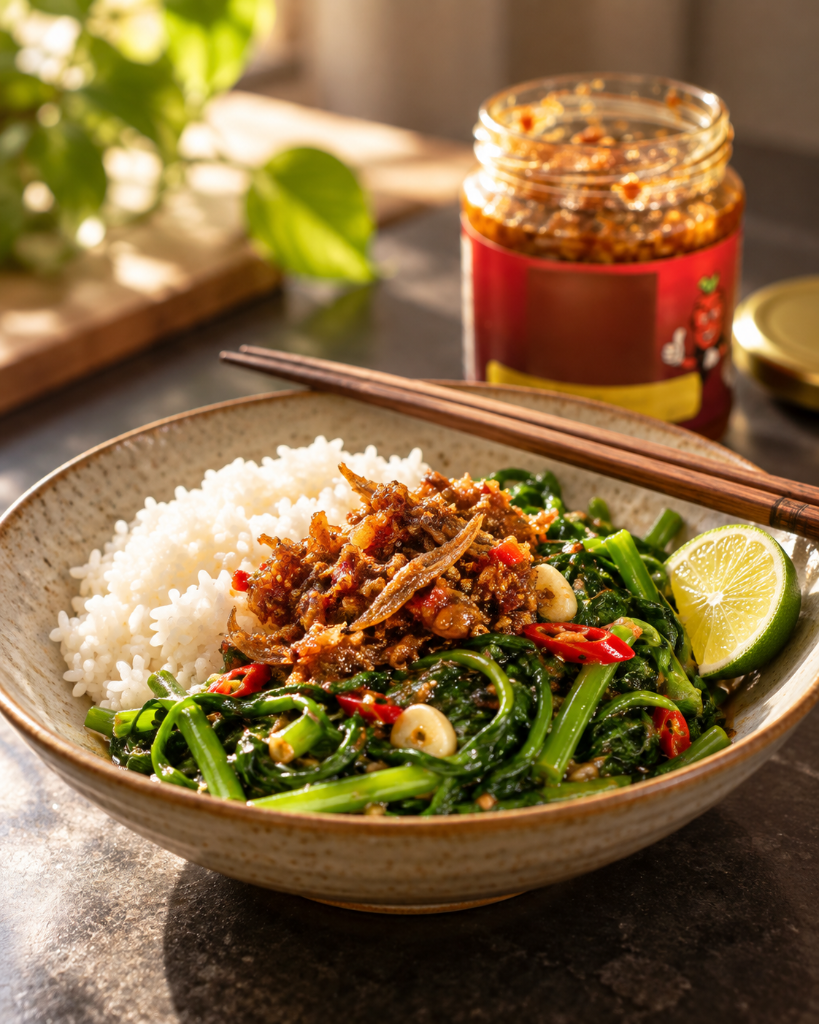
Image caption: Kangkung Tumis Sambal Teri — stir-fried greens with anchovy sambal
Recipe: Kangkung Tumis Sambal Teri (Stir-Fried Water Spinach with Anchovy Sambal)
This is one of the most common vegetable dishes in Indonesian home cooking. It requires five ingredients and approximately five minutes. The result is a side dish that improves every protein it accompanies.
Serves 2
What you need:
- 2 cups kangkung (water spinach), rinsed and trimmed — substitute baby spinach, English spinach, or broccolini if kangkung is unavailable
- 2 cloves garlic, thinly sliced
- 1 teaspoon SS Mart Sambal Teri
- 1 tablespoon neutral oil (vegetable, canola, or rice bran)
- 2 tablespoons water
- Steamed rice, to serve
Method:
Heat a wok or large frying pan over high heat until it is very hot — a drop of water should evaporate immediately on contact.
Add the oil. When it shimmers, add the sliced garlic. Fry for 30 to 45 seconds, stirring constantly, until the garlic is fragrant and beginning to colour at the edges. Do not let it burn.
Add the kangkung (or substitute greens) all at once. The water on the leaves from rinsing will create steam; this is useful. Toss quickly in the pan.
Add the Sambal Teri and the splash of water. Continue to stir-fry for 1 to 2 minutes. The water spinach should be wilted but still bright green; broccolini will need an extra 30 seconds. The sambal will distribute through the greens as you toss.
Taste. The sambal brings its own salt, so additional seasoning may not be needed. If the dish wants more depth, add another small amount of sambal. If it needs acid, a few drops of lime juice will lift it.
Serve immediately over steamed rice.
Notes: Kangkung is available at most Asian grocery stores across Melbourne and in larger Asian supermarkets nationally. It has a hollow stem and cooks faster than most greens. If using broccolini, blanch it briefly in salted water first and drain well before adding to the wok — it is denser and needs more time to cook through.
The same technique works with any quick-cooking leafy vegetable. In Indonesia, this dish appears daily on the family table because it is fast, inexpensive, and deeply satisfying. The sambal teri is doing the work that seasoning usually requires, in a single addition.
SS Mart Sambal Teri is made fresh in Carlton, Melbourne, and shipped across Australia. Available in 130g jars. No preservatives. No artificial additives. Indonesian-made, Melbourne-fresh.
Share
Related articles
November 10, 2026
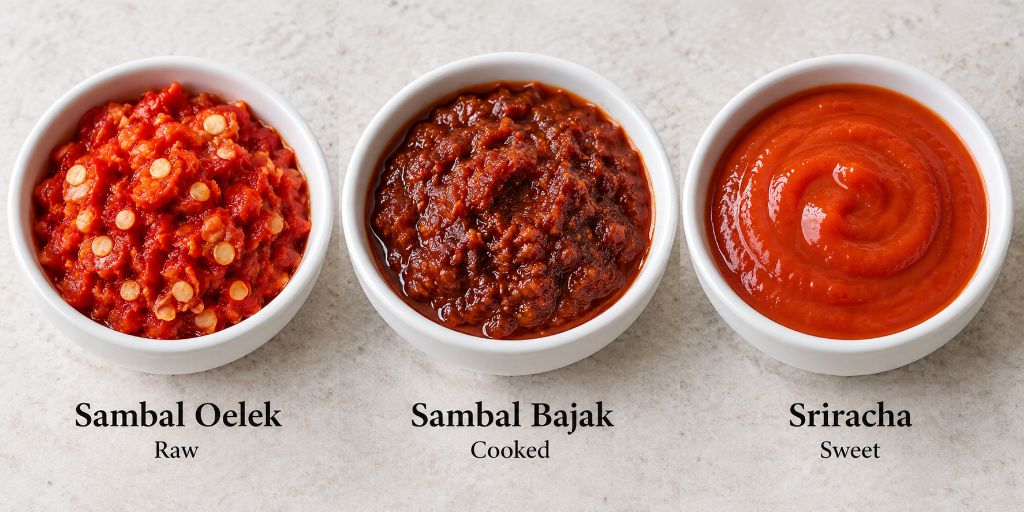
Sambal Oelek vs Sambal Bajak vs Sriracha: What's the Difference (and What to Use Instead)
November 3, 2026
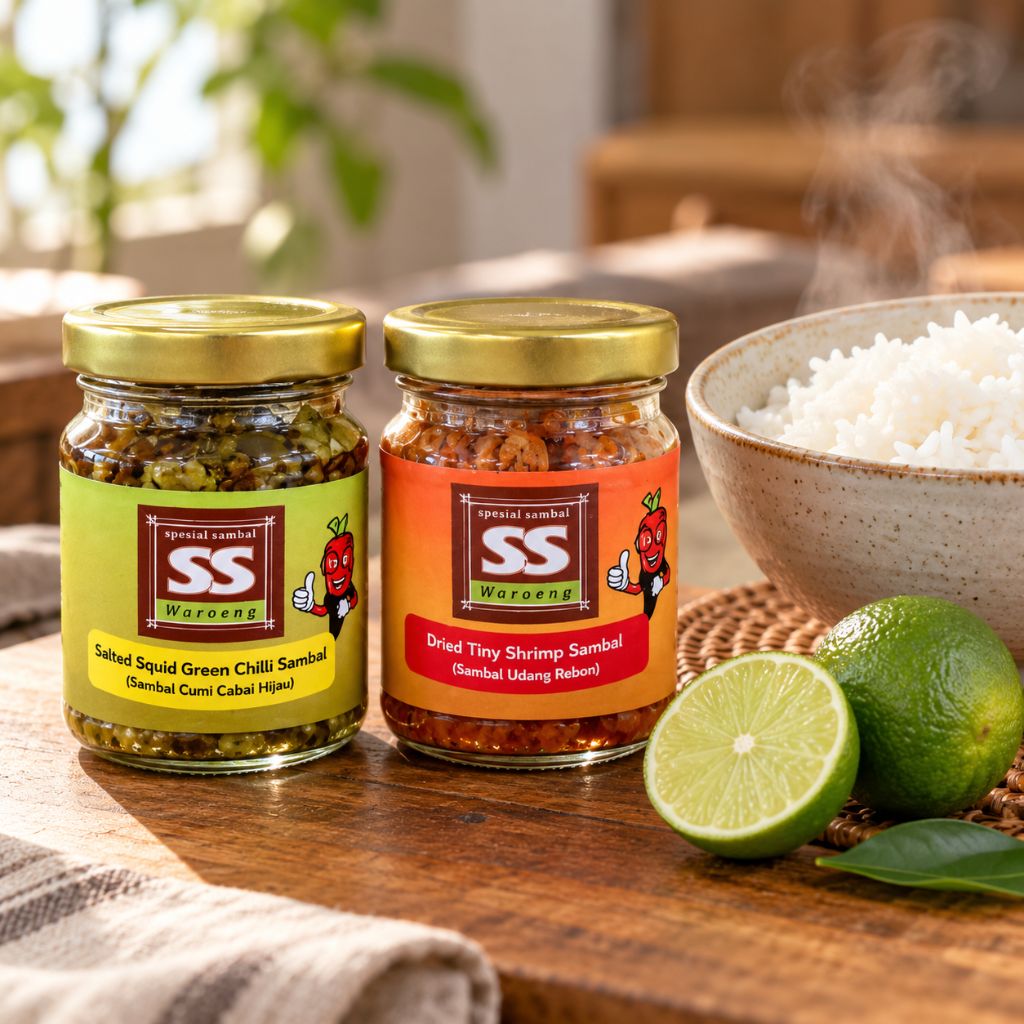
Sambal Udang and Sambal Cumi Asin: The Seafood Sambals That Define Coastal Indonesian Flavour
October 27, 2026
What Is Sambal? A Beginner's Guide to Indonesia's Essential Chili Condiment